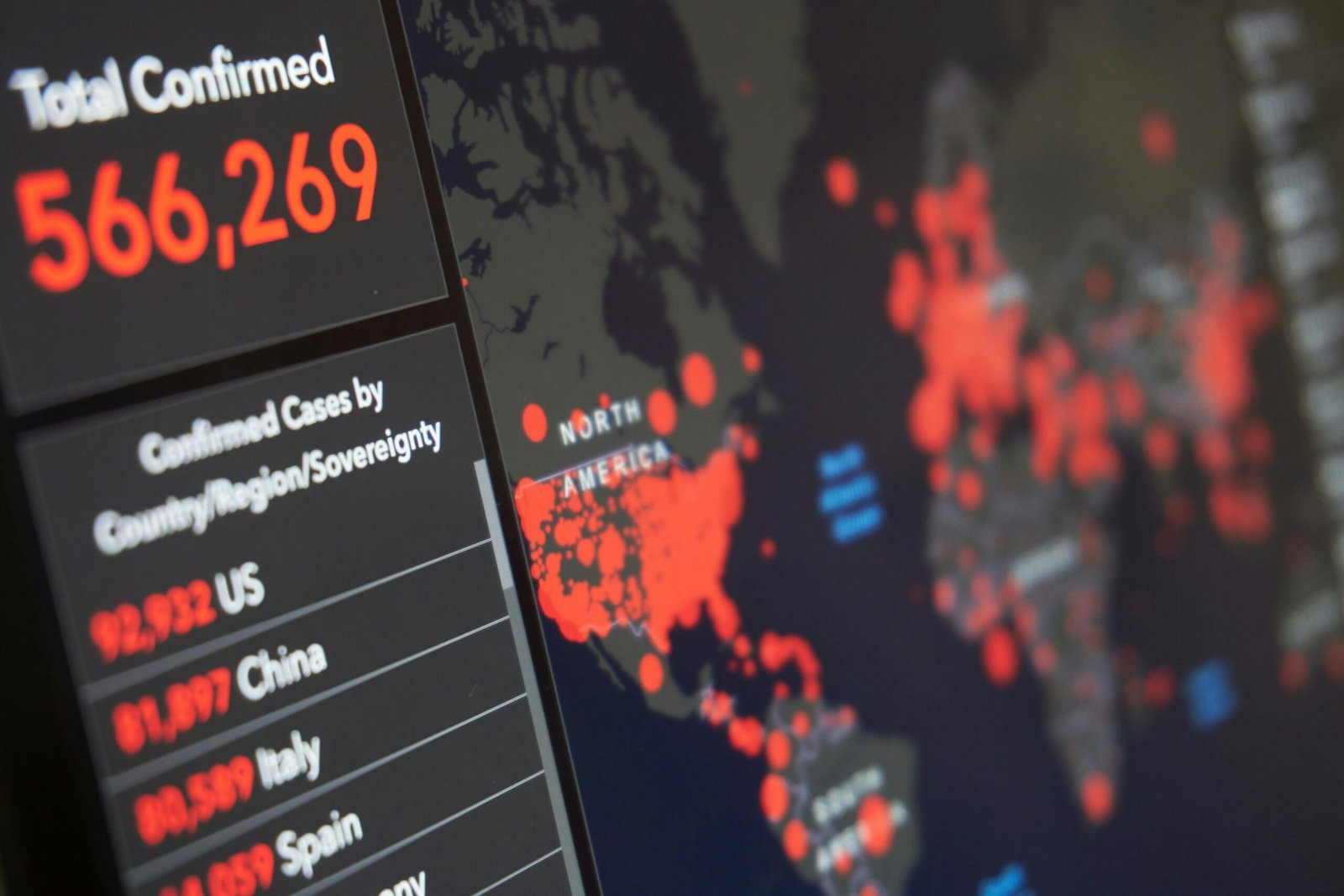
Strategic blindness is not a failure of intelligence or intent; it is a systemic deficit in executive perception, compounded by the velocity and opacity of global risk. In high-stakes environments, where reputational exposure is measured in milliseconds, organizations are not undone by what they do not know, but by what they refuse to see. This article reframes strategic blindness as the principal multiplier of global risk, mapping its organizational mechanics, second-order effects, and the frameworks required to anticipate and neutralize its impact.
When Strategic Blindness Becomes an Organizational Default
Strategic blindness is rarely the result of a single misjudgment. It emerges when organizations normalize selective perception—filtering signals to fit preferred narratives or strategic plans. In an era defined by volatility and hyper-transparency, this cognitive narrowing is not merely a leadership flaw; it is an institutionalized risk vector. Research from the Reputation Institute (2023) highlights that 68% of global crises that impacted market capitalization were preceded by ignored or deprioritized early-warning signals.
The normalization of strategic blindness is often reinforced by internal incentive structures. Executives, under pressure to deliver short-term results, deprioritize ambiguous or contradictory data. This bias is further institutionalized through governance models that reward consensus over contrarian insight, and by risk committees that conflate action with effectiveness. The result is a self-reinforcing loop: the more risk is managed through familiar frameworks, the more invisible novel threats become.
This organizational default has direct implications for public trust. Stakeholders—ranging from institutional investors to regulators—are increasingly intolerant of post-crisis rationalizations. When strategic blindness is exposed, it is not perceived as an honest error, but as a breach of fiduciary responsibility. This shift in external expectations means that the cost of inaction is no longer confined to operational disruption; it extends to the erosion of legitimacy itself.
Risk Multiplication: The Hidden Cost of Executive Overconfidence
Overconfidence at the executive level is not a personality trait—it is a risk amplifier embedded in decision systems. Data from McKinsey’s 2022 Global Board Survey indicates that 57% of board-level risk assessments underestimate the probability and velocity of non-linear threats. This is not due to lack of expertise, but to an overreliance on historical precedent and internal consensus.
The hidden cost of this overconfidence is risk multiplication. When leadership teams conflate confidence with competence, they systematically discount weak signals and alternative scenarios. This is especially acute in multinational organizations, where geopolitical, regulatory, and reputational risks are interdependent and non-transparent. The result: risk portfolios that appear diversified on paper but are, in reality, highly correlated through shared blind spots.
Traditional risk management frameworks are ill-equipped to address this dynamic. They tend to focus on quantifiable exposures and backward-looking metrics, missing the latent vulnerabilities embedded in executive cognition. The implication for boards and risk officers is clear: the most significant risks are not those that can be modeled, but those that are systematically excluded from consideration.
Systemic Gaps in Signal Detection and Leadership Accountability
Signal detection is not a technical challenge; it is a governance imperative. In complex organizations, the failure to detect weak signals rarely stems from insufficient data. Instead, it is the result of fragmented information flows, siloed expertise, and implicit norms that discourage escalation of inconvenient truths. A 2023 Deloitte study found that only 24% of global organizations have formal mechanisms for surfacing dissenting risk perspectives at the executive level.
Leadership accountability is further diluted by ambiguity in role definition and ownership of risk. When everyone is responsible, no one is accountable. This diffusion is exacerbated by the proliferation of risk committees, which often function as forums for risk transfer rather than risk ownership. The absence of clear lines of accountability enables strategic blindness to persist, even when early-warning signals are present and visible.
The systemic gap is not just internal. External stakeholders—analysts, regulators, and the media—now have access to real-time data and alternative narratives. Leadership teams that fail to align internal signal detection with external scrutiny expose themselves to asymmetric information risk. This asymmetry can rapidly escalate from operational exposure to reputational crisis, as external actors surface risks that organizations chose to ignore.
Reputation Exposure: Mapping the Second-Order Effects
Reputation exposure is no longer a linear consequence of operational failure; it is a complex function of how organizations perceive, interpret, and act on risk signals. Second-order effects—such as regulatory intervention, activist investor campaigns, and talent flight—are triggered not by the initial event, but by the perceived failure of leadership to anticipate and respond. Recent analysis by Oxford Saïd Business School shows that 74% of reputational crises in the past five years were exacerbated by delayed or inadequate executive response.
Mapping these second-order effects requires a shift from event-driven to system-driven risk analysis. The reputational impact of strategic blindness is magnified when stakeholders perceive a pattern of neglect or evasion. This pattern is quickly institutionalized in market narratives and rating agency models, leading to downgrades, capital flight, and long-term erosion of competitive position.
The most acute reputational exposure occurs when strategic blindness is revealed to be systemic rather than episodic. In these cases, the organization is not judged solely on the basis of the triggering event, but on the cumulative evidence of governance failure. For executive teams, the implication is unambiguous: the true cost of strategic blindness is not the crisis itself, but the loss of stakeholder trust in the organization’s capacity to learn and adapt.
Frameworks for Anticipating and Neutralizing Strategic Myopia
Neutralizing strategic myopia requires more than periodic risk reviews; it demands a structural overhaul of how organizations perceive and prioritize uncertainty. The “Three Lenses” framework—Perception, Escalation, and Accountability—offers a pragmatic approach:
- Perception: Institutionalize dissent by embedding contrarian analysis into board and executive deliberations. Mandate periodic “red team” reviews of core assumptions and scenario plans.
- Escalation: Establish formal escalation protocols for weak signals, with clear thresholds for executive attention and board notification. Integrate external intelligence streams to counterbalance internal bias.
- Accountability: Assign explicit ownership of risk domains to individual executives, with performance metrics tied to anticipation and mitigation, not just response.
Actionable steps include deploying real-time signal detection tools, conducting quarterly strategic vulnerability audits, and instituting independent reputation risk reviews. These measures do not eliminate uncertainty, but they materially reduce the probability of strategic blindness becoming an organizational default.
The most effective organizations treat strategic myopia as a dynamic threat, subject to continuous challenge and recalibration. They recognize that the real multiplier of global risk is not complexity itself, but the institutionalized refusal to see it. This mindset shift—operationalized through governance, incentives, and accountability—differentiates resilient organizations from those perpetually exposed to the next crisis.
Strategic blindness is not a theoretical construct; it is a measurable, actionable risk multiplier embedded in executive decision systems. In a world where reputation is both asset and accelerant, the failure to detect and address this blindness constitutes a primary exposure—one that is visible to stakeholders, markets, and adversaries alike. For leaders operating in high-visibility, high-stakes contexts, the imperative is not merely to manage risk, but to confront the institutional mechanisms that render it invisible. The signals are already present; the question is whether organizations will choose to see them before the next crisis makes the cost undeniable.